« In our ecosystem, practicing polyculture is second nature ».
Since our establishment in 2018, we have also been driven by a passion for aromatic and medicinal plants (AMPs) and olive trees!
Visualisez la gamme avec la Brochure Fleurs de Garrigue
Orders online or by phone


Cultivating Botanical Diversity
our varieties


Around fifty varieties of aromatic and medicinal plants are grown on 9,000 m². They have been selected for their colors, as well as their culinary or medicinal qualities. The plants are then used to create herbal teas, seasonings, syrups, aromatic vinegars, hydrosols, and essential oils (see the full range in our shop).
Our main aromatic crop is Italian helichrysum, grown for the production of essential oil—a precious oil also known as immortelle.
The aromatic and medicinal plants (AMPs) are grown using Organic and Biodynamic farming methods. Cultivation is minimally mechanized, with mulching, weeding, and harvesting done by hand.
A wide variety of other hardy Mediterranean plants, which require little water, grow along the edges of the forest, on isolated and protected plots.
CThis is how we cultivate diversity, with local plants such as capers, thujanol thyme, lemon thyme, savory, oregano, marjoram, hyssop, common sage, Larzac lavender, verbenone rosemary, and more.
We have also cultivated plants from other regions, but well adapted to our climate, such as rose-scented geranium, holy basil, lemon verbena, red shiso (a Japanese plant), licorice, prickly pear (goji berries), and more.
A small portion of the crops is irrigated during the most extreme conditions; these include mints, lemon balm, chamomile, agastache, shiso, basil, calendula, and sunflowers.
Our favorite tools: the sickle, the pruning knife, the pole pruner, and, more recently, the tea shear!
We only harvest what we need. And we need little—but it must be of high quality!
The
Harvest
Among the wild-harvested plants used in the range are bay laurel, black elderberry, horsetail, St. John’s wort, poppy, bramble, bamboo, acacia, plantain, mallow, hawthorn, wild garlic (or field garlic), as well as arugula, fennel, and sarsaparilla.
For certain varieties, such as wild fine lavender, carrot, nettle, or meadowsweet, harvesting is done with the landowner’s permission in untamed, uncultivated areas, far from foot traffic and any pollution.
The plants are hand-picked with care and awareness, respecting natural cycles, and always at the peak of their aromatic expression.
For wild harvests, we climb trees, use pruning poles, or other clever methods to pick without getting pricked (hawthorn, bramble) and without damaging the tree (elderberry). More than a rule, our philosophy is always to leave two-thirds of the plants in place. The flowers that remain will be pollinated, producing small fruits that feed the birds in autumn, which will disperse seeds, and so on… Our intervention and harvesting must have no noticeable impact in the medium term.
About ten wild plants are hand-harvested in their natural habitats, often near our cultivated fields and in the Hérault Valley.


know-how
Traditions and Magic in the Cauldron


It’s a childhood dream to follow the seasons and create preparations according to one’s whims. By following medieval recipes or old books, these desires come to life. The world of plants is endless, from wild and edible ones to aromatic and medicinal varieties…
Dusting off old herbal tea recipes, blending aromas, using an old still: the craft of a farmer-herbalist is a profession for the curious, the creative, and the passionate. It’s a way to restore traditional herbalism to its former glory, while respecting modern scientific knowledge and practices.
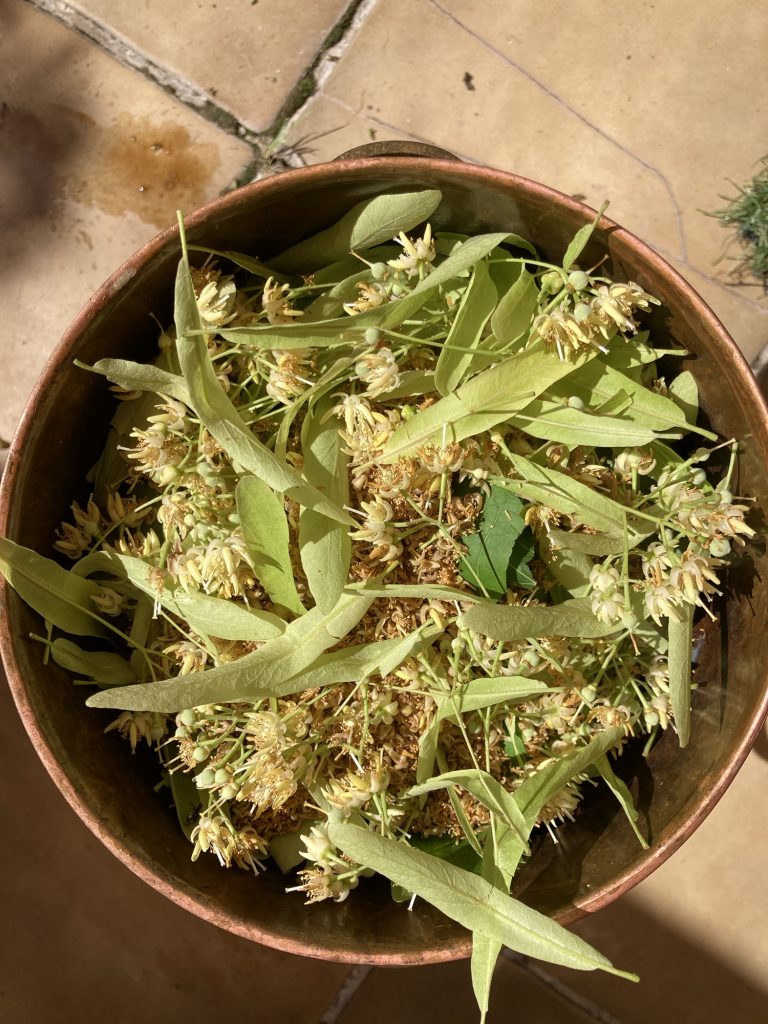
The products are crafted in our workshop in Jonquières, where you’ll find our small herbalist’s shop, a low-temperature plant dryer, a copper still, decanting flasks, grinders, vials, herb sachets, and cauldrons…